



You lean over the sink to brush your teeth and the water is already pooling around your knuckles. By the time you finish rinsing, there’s a gray ring at the waterline and the drain gurgles like it’s mocking you. Sound familiar?
Learning how to unclog a slow bathroom sink naturally is less about plumbing skill and more about knowing where to look first. Most fixes take under an hour and use things already sitting in your kitchen cabinet.
The good news: most bathroom sink clogs are surprisingly simple to fix with stuff already in your kitchen. No plumber. No chemical burns. No waiting until it becomes a full blockage, shares American Heritage Management.
Why Your Bathroom Sink Drains Slowly (And What’s Actually Down There)
The inside of a bathroom drain isn’t just a clean metal tube that occasionally traps hair. It’s a sticky, layered mess — and understanding what you’re dealing with changes which fix you reach for first.
Hair is the obvious culprit, but hair alone doesn’t form a clog. What makes bathroom clogs so stubborn is the combination: hair strands catch on the pop-up stopper mechanism, then soap scum binds the strands together into a gelatinous mat. Toothpaste residue and shaving cream add more paste-like layers on top. In hard-water areas, mineral deposits from evaporated water coat everything in a chalky film that narrows the pipe diameter further.
“My bathroom sink is draining really slowly, I finally worked out how to remove the plunge plug and it had loads of black gunk (please don’t judge).”
— Facebook DIY group user, 40+ comments (2025), describing the universal experience of discovering what lives in a bathroom drain
That black gunk? It’s a biofilm — bacteria feeding on soap residue, shed skin cells, and whatever else washes off your face and hands. It smells faintly like a damp basement and feels slimy to the touch. This is what you’re actually fighting, not just a single hairball.
A slow drain usually means the blockage is in the upper part of the plumbing — the pop-up stopper assembly or the first few inches of the tailpiece. A full clog that won’t drain at all often means the P-trap or beyond. Knowing this distinction saves you from dismantling pipes you don’t need to touch.
Baking Soda and Vinegar — The Classic Fix (And When It Works)
This is the one everyone mentions first, and for good reason. The fizzing reaction between sodium bicarbonate (baking soda) and acetic acid (vinegar) creates carbon dioxide bubbles that physically agitate the gunk, scrubbing the pipe walls without abrasion. It works best on organic clogs: soap scum, biofilm, and loose debris. It will not dissolve a solid hair mass or mineral deposits.
The ratio matters more than most articles let on. Too much vinegar and the reaction is violent but brief, most of it happens above the clog, not in it. Too little and the fizz is too weak to dislodge anything.
Here’s the method that’s worked across dozens of slow bathroom sinks:
- Remove standing water from the sink if there’s any, you want the mixture reaching the clog, not diluted in a pool.
- Pour 1/2 cup of baking soda directly into the drain opening. Tap the sink to help it settle into the pipe.
- Follow immediately with 1/2 cup of white vinegar. You’ll hear the fizzing start.
- Cover the drain opening with a damp cloth or the sink stopper. This forces the CO₂ downward instead of letting it escape up.
- Wait at least 30 minutes. An hour is better for slow drains that have been building up for weeks.
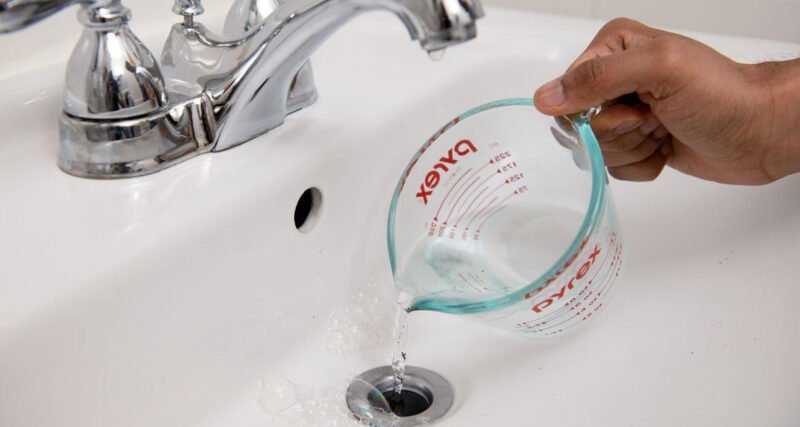
- Flush with a full kettle of boiling water, not just hot tap water. The heat alone helps melt soap scum.
Oddly enough, covering the drain is the step most people skip, and it’s the one that makes the biggest difference. Without it, you’re cleaning the air above the sink more than the pipe below it.
If the drain is still slow after one treatment, a second round usually clears it. If it doesn’t, the clog is likely mechanical, hair wrapped around the stopper, and the next section is your fix.
Clean the Pop-Up Stopper (Where Most Clogs Start)
In most bathroom sinks, the pop-up stopper is the primary hair trap. A three-inch metal rod with a ball joint sits right at the drain opening, and hair wraps around it like thread on a spool. You can pour baking soda and vinegar past it all day, the clog will reform within a week because the root cause is still there.
This sounds intimidating the first time. It’s actually a five-minute job with zero plumbing experience required.
Get under the sink with a flashlight. You’ll see a horizontal rod running into the back of the vertical drainpipe, that’s the pivot rod. At the point where it enters the pipe, there’s a spring clip (or a nut, on older sinks) holding it in place. Squeeze the clip and slide it off, then pull the pivot rod straight out. The stopper in the sink above will now lift freely.
“LPT: Unclog your drain, the natural and cheap way. Pouring hot water does. Some hot water mixed with a little dish soap will generally clear most clogs, then a little mechanical action around the stopper finishes the job.”
— r/LifeProTips, 888 upvotes, 151 comments (2013), source
What comes out on that stopper will probably be unpleasant. A black, hairy, soap-caked clump that looks like something from a horror movie. Scrape it into the trash, not down the drain you’re trying to fix. Scrub the stopper with an old toothbrush and dish soap. While it’s out, shine the flashlight down the drain opening and pull out any visible hair with needle-nose pliers or a bent wire.
One mistake people make: forgetting to close the stopper before removing the pivot rod. If the stopper is in the “up” (open) position when you pull the rod, it can drop deep into the drain and become difficult to retrieve. Close it first, then pull the rod.
Reassemble in reverse: drop the stopper back in, align the hole at the bottom of the stopper with the pivot rod entry point, slide the rod through, and snap the clip back on. Test by lifting and lowering the stopper a few times before running water.
When the P-Trap Is the Real Problem
If you’ve cleaned the stopper and done the baking soda treatment and the sink is still slow, the clog has moved deeper, into the U-shaped pipe directly under the sink. Plumbers call this the P-trap, and its job is to hold a small amount of water that blocks sewer gas from coming up through your drain. It also happens to be an excellent collection point for everything that gets past the stopper.
Cleaning a P-trap is borderline foolproof. Unlike wall-side plumbing, these connections are hand-tightened slip joints designed to be removed without tools. You’ll need a bucket, some old towels, and about fifteen minutes.
Place the bucket directly under the P-trap. The curved section connects to two straight pipes via slip nuts, one at the top (coming from the sink) and one at the side (going into the wall). Loosen both nuts by hand. Once they’re loose, the entire U-shaped section lifts out.
Expect about a cup of water to come out with it. It will smell. This is normal, that trapped water has been sitting there since the last time the sink was used, marinating in whatever was going down the drain.
Hold the P-trap over the bucket and tap it firmly. Most of what’s inside should fall out: gray sludge, hair matted into a rope, maybe a toothpaste cap that someone dropped three months ago and forgot about. If anything’s stuck, a bottle brush or bent coat hanger run through the pipe clears it. Rinse the P-trap in another sink before reinstalling.
When you put it back, hand-tighten the slip nuts firmly but don’t crank them with a wrench, overtightening cracks the plastic washers inside, and that’s when a simple cleaning turns into a trip to the hardware store. Run the water and check for drips at both connections. A slow drip means the nut needs another quarter turn.
Prevent Clogs Before They Start
Prevention here isn’t a lifestyle change. It’s about thirty seconds a week. The people whose bathroom sinks never clog aren’t doing anything complicated, they’ve just made the default state harder for clogs to form.
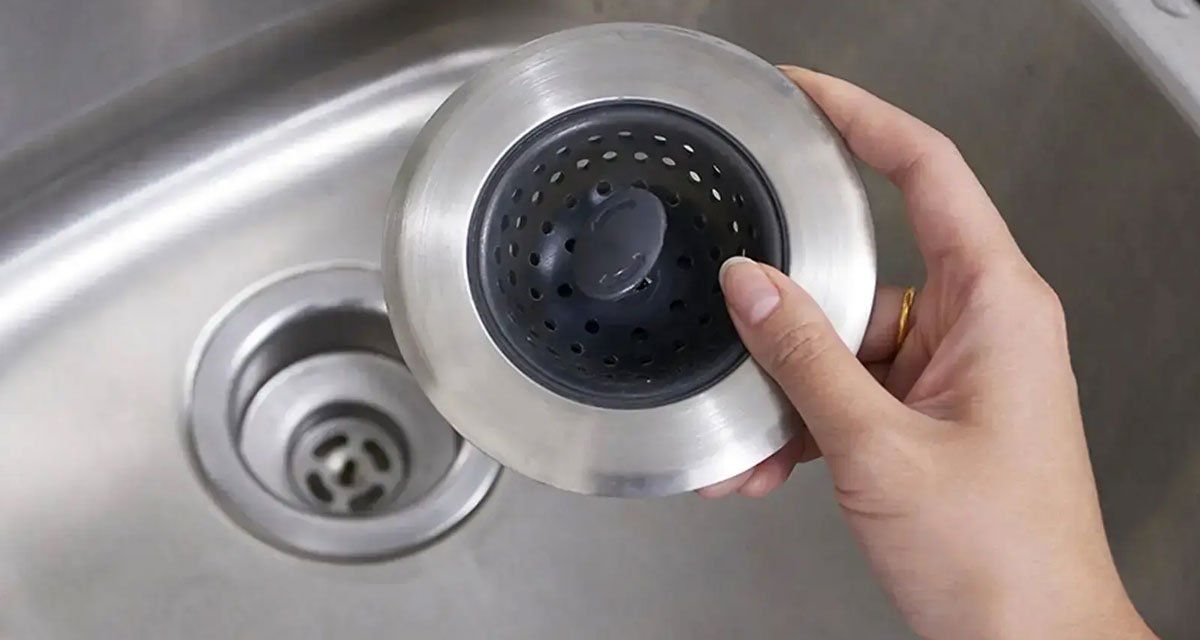
A drain screen or hair catcher sits in the drain opening and costs about three dollars. It catches hair before it enters the pipe. Clean it after every few showers and the hair never reaches the stopper in the first place. Plastic mesh screens work fine. Silicone ones with small nubs are slightly better at catching fine hair. Either one will prevent 90% of the situations where you’d need to learn how to unclog a slow bathroom sink naturally in the first place.
Once a month, pour a kettle of boiling water down the drain. That’s it, no baking soda, no vinegar, just boiling water. It melts the soap scum film before it can accumulate into a sticky layer. Do this on the first Saturday of every month and you’ll probably never need the rest of this article.
“My Dad showing how to unclog a sink without taking it apart. 2.5k upvotes, a lot of people grew up watching their parents fix things and never learned the simple version.”
— r/lifehacks, 2501 upvotes, 135 comments (2023), source
What you should never pour down a bathroom sink: cooking oil (solidifies in pipes), coffee grounds (they don’t dissolve, they just accumulate), and hair from cleaning your brush (it clumps immediately). These are kitchen-sink habits that cause bathroom-sink problems.
For homes with hard water, add a monthly vinegar soak to the routine. Pour one cup of white vinegar down the drain and let it sit for an hour before flushing with boiling water. The acetic acid slowly dissolves the mineral scale that narrows your pipes. In soft-water areas, this step is unnecessary.
Frequently Asked Questions
Is baking soda and vinegar better than Drano?
For slow drains and organic clogs, yes, baking soda and vinegar are safer for your pipes, your lungs, and the environment. Chemical drain cleaners work by generating heat (Drano can reach boiling temperatures inside the pipe) and using sodium hydroxide to dissolve organic matter. Per the EPA, these chemicals can damage older metal pipes with repeated use and pose a respiratory risk in poorly ventilated bathrooms. However, for a completely blocked drain that won’t drain at all, chemical cleaners are sometimes the only DIY option short of snaking the line. Reserve them for emergencies.
How often should I use baking soda and vinegar on my drains?
As a treatment for an existing slow drain, use it once or twice as needed until the drain runs clear. As a preventive, once a month is plenty, more often doesn’t help and the vinegar’s acidity can theoretically etch older metal pipes over many years of daily use. For most homes, a monthly boiling-water flush does the same preventive work with zero risk.
Can I fix a slow bathroom sink myself or do I need a plumber?
Most slow bathroom sink drains are fixable in under an hour with no special tools. Start with the stopper cleaning, then try baking soda and vinegar, then the P-trap. Call a plumber if: the clog persists after cleaning the P-trap, you hear gurgling in other drains when the sink runs (vent issue), water backs up in the tub or toilet when you run the sink (main line blockage), or you notice water stains on the ceiling below the bathroom (leak in the wall).
Why is my sink still draining slowly after using baking soda and vinegar?
If the drain is still slow after one or two baking soda treatments, the clog is almost certainly mechanical, hair wrapped around the pop-up stopper or a solid mass in the P-trap. The fizzing reaction cleans film and loose debris but can’t dissolve solid hair clumps. Move to the stopper-cleaning step above.
Are natural drain cleaning methods safe for old pipes?
Baking soda and vinegar are generally safe for all pipe materials, including older galvanized steel and cast iron. Boiling water is also safe for metal pipes but should be used cautiously with PVC, while PVC can handle boiling water (rated to ~140°F continuous, higher for brief exposure), pouring an entire kettle repeatedly can soften the pipe joints over decades. For homes with PVC plumbing older than 20 years, use hot tap water instead of boiling water for the final flush.
When Natural Methods Hit Their Limit
There’s a point where persistence becomes expensive. If you’ve cleaned the stopper, flushed the drain with baking soda and vinegar twice, and pulled the P-trap, and the sink is still draining slowly, the problem is past what a DIY natural approach can fix. The blockage is likely in the wall pipe, where a plumbing snake or professional auger is the right tool.
Honestly, I’ve hit this wall once. I spent three hours and four rounds of baking soda on a bathroom sink that turned out to have a collapsed section of galvanized pipe inside the wall, narrowed to about the diameter of a pencil from sixty years of corrosion. No amount of fizz was going to fix that. The plumber had it replaced in forty minutes.
The goal isn’t to avoid plumbers at all costs. It’s to avoid paying for the easy stuff you can do yourself. Once you’ve done the easy stuff and it hasn’t worked, calling someone is the smart move, not the failure.