



Water on the Ceiling, Nothing Wrong With the Roof
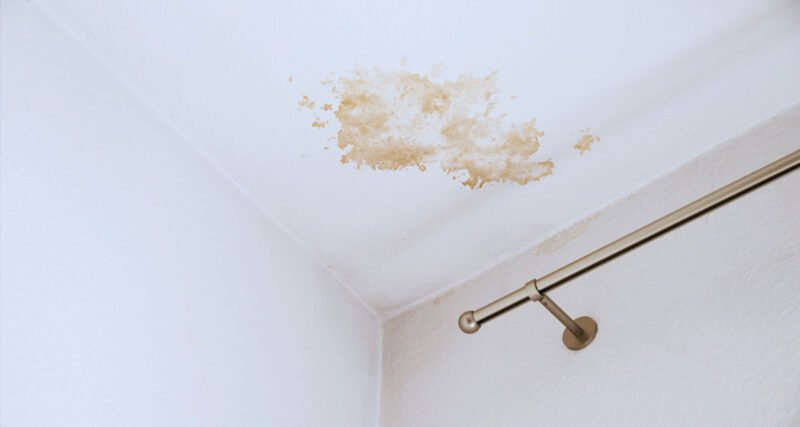
You spot a brown stain spreading across the bedroom ceiling. You grab a ladder, walk the perimeter of the house, squint at the shingles. Nothing. No missing tabs, no obvious holes, no tree branch sitting where it should not be. Yet water is getting in, notes TCT Management.
This is not a rare scenario. Hidden roof leak causes but no visible damage pointing to an obvious culprit account for a large share of contractor callouts. The entry point is almost never where the water stain shows up inside. Water can travel 10 to 20 feet from the actual breach before it drips onto your ceiling.
“Roofers can’t find source of leak and at a loss”
— r/HomeImprovement, 39 upvotes, 59 comments (2021), source
Even professionals sometimes need multiple trips. But most hidden leaks trace back to a handful of specific causes. Once you know what to look for and where, the mystery shrinks considerably. Sound familiar?
Failed Flashing — The Most Common Hidden Culprit
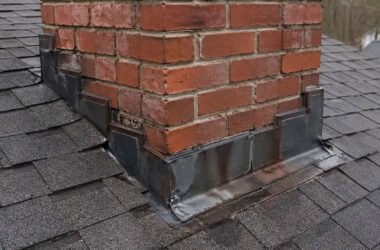
Flashing is the metal stripping installed wherever the roof meets a vertical surface — chimneys, dormer walls, vent pipes, skylights, and in the valleys where two roof slopes join. Its job is straightforward: redirect water away from seams that shingles alone cannot seal.
A strip of metal no wider than your hand, tucked behind brick or siding. When it works, you never think about it. When a seam separates by a quarter-inch, from corrosion, thermal expansion, or a sloppy original install, water finds that gap during the next wind-driven rain and follows the roof deck straight into your attic.
What makes flashing failures maddening is their invisibility. The gap is often behind a chimney or inside a valley you cannot see from the ground. In the attic, look for water stains on rafters near chimneys, and dark streaks running down from any penetration through the roof deck. Those streaks are the water’s travel path, follow them uphill to find the breach.
Pipe Boot and Vent Boot Failures
Every plumbing vent pipe that pokes through your roof has a rubber collar around its base, a pipe boot. That rubber sits in full sun, endures freeze-thaw cycles, and bakes at roof-level temperatures that can hit 150°F in summer. Most rubber boots last 10 to 15 years before they crack, split, or lose their seal around the pipe.
The damage is impossible to see from the ground because the boot sits under the shingles and the pipe itself looks intact. Up close, you might see cracks radiating out from the pipe, or the rubber pulling away from the metal base. In the attic, the telltale sign is a water stain directly under a vent pipe, this one is usually easier to trace than flashing leaks because the path is more vertical.
Oddly enough, pipe boot leaks tend to announce themselves during light rain rather than heavy downpours. In a downpour, water sheets off the roof fast enough that only a small amount seeps through the crack. A slow, steady drizzle gives water time to pool and find every tiny opening.
Condensation, When It’s Not Actually a Leak
Not every drip from the attic is water coming in from outside. Among the roof leak causes but no visible damage to the exterior, condensation is the one that has nothing to do with the roof itself. In cold weather, warm moist air from the living space rises into a poorly ventilated attic, hits the cold underside of the roof deck, and condenses into water droplets. The resulting drip pattern can look identical to a roof leak.
How to tell the difference: a roof leak correlates with rain, it starts during or right after a storm, and the water stains are localized in one area. Condensation tends to appear across a wider area, often near the ridge, and shows up on cold nights even when it hasn’t rained in a week. You might also see frost on the roofing nails in the attic during winter, the nails act as condensation points.
The fix is rarely the roof itself. Improving attic ventilation, soffit vents that let air in, ridge or gable vents that let it out, usually solves the problem. Adding a bathroom exhaust fan that actually vents outside rather than into the attic helps too. More than a few “roof leaks” have been fixed by installing a $30 soffit vent.
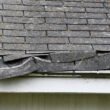
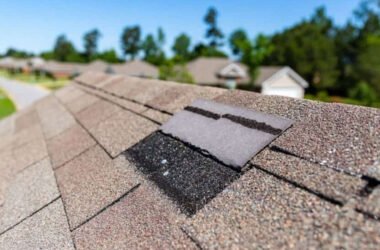
A hailstorm leaves obvious damage when it’s severe, dents on cars, shredded window screens, divots in siding. But the hailstone that hits your roof at just the right angle, at just the right size, can bruise a shingle’s fiberglass mat without tearing off any granules. From ground level the roof looks fine. Underneath, the impact zone has lost its waterproof integrity.
The hailstone that bruised your roof three summers ago left a mark the size of a dime. Every rainstorm since has widened that microscopic breach a little more. Eventually enough water seeps through to show up on the ceiling, long after you’ve forgotten the storm that caused it.
Wind damage follows a similar pattern. Shingles can lose their adhesive seal along the edges without actually blowing off. Wind-driven rain gets under those lifted edges, and because the shingles settled back down when the wind stopped, everything looks normal from below.
“I noticed two leaks in the attic, which started recently. The roof is a shingles roof and no visible damage to the roof.”
— r/Insurance, 14 upvotes, 16 comments (2023), source
Clogged Gutters and Drainage Failures
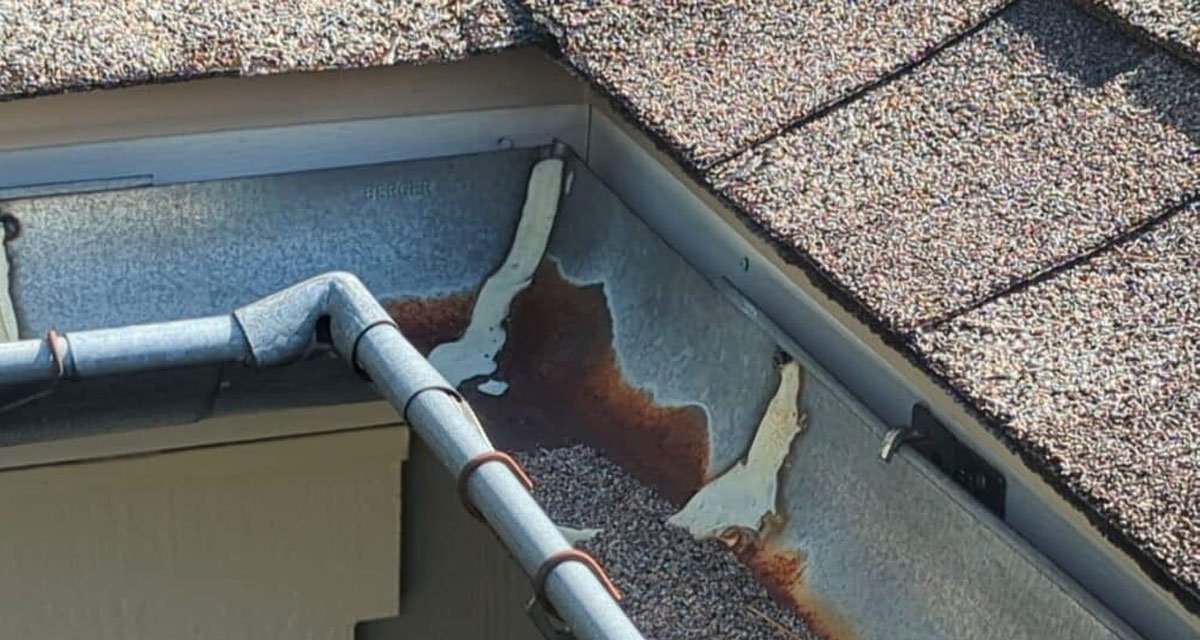
A gutter packed with leaves does more than spill water over the side. When water backs up, it can run under the eaves and soak the fascia board and roof decking at the edge. The leak shows up on an interior wall near the ceiling line, nowhere near where you’d think to check on the roof itself.
Valley gutters, the channels where two roof slopes meet, are especially vulnerable. A small accumulation of debris in a valley can dam water during heavy rain, forcing it sideways under the shingles. From the ground, the valley looks clean. From the attic, you might see a damp spot along the valley line that stays wet for days after rain stops.
The check is simple: during the next heavy rain, go outside with an umbrella and watch your gutters. If water is spilling over the sides anywhere, or if a downspout isn’t carrying water away, you’ve found at least part of the problem.
Skylight and Roof Window Seal Failures
Skylights have a factory-installed seal between the glass unit and the frame, plus a separate flashing kit that integrates the skylight into the roof. Either can fail. The glass-to-frame seal degrades with age and UV exposure. The flashing can separate from the skylight curb, especially if the skylight was installed after the original roof and the integration wasn’t perfect.
Skylight leaks are deceptive because the water often runs down the inside of the skylight shaft, the drywall tunnel between the roof and the ceiling, before dripping onto the floor or furniture several feet from the skylight itself. You see a wet spot on the floor, look up, and the ceiling around the skylight looks dry. The water bypassed the visible area entirely.
Aging Underlayment, The Barrier Nobody Sees
Between your shingles and the wood roof deck sits a layer of asphalt-saturated felt or synthetic underlayment. It’s the second line of defense. On roofs older than 20 years, this underlayment can turn brittle, tear, or simply disintegrate in spots.
When underlayment fails, water that gets past the shingles, through a lifted edge, a cracked shingle, or wind-driven rain, has nothing stopping it from reaching the deck. The shingles still look fine from below because they are. The problem is what’s underneath them.
This is one of the hardest leaks to self-diagnose because you cannot see the underlayment without lifting shingles. If your roof is approaching the 20-year mark and you’re getting mystery leaks after wind storms, degraded underlayment should be high on the suspect list.
Where the Water Actually Starts — Attic Inspection Step by Step
You need a flashlight, a tape measure, a piece of chalk or painter’s tape, and a dry day with rain forecast within the next 48 hours. Go into the attic during daylight. Before turning on the flashlight, scan for any pinpoints of daylight coming through the roof deck, those are direct entry points for water.
With the flashlight, start at the ceiling stain and work upward along the rafters. Water follows gravity and the slope of the roof deck. Look for dark streaks on the underside of the decking, discolored or compressed insulation, and rust on any exposed roofing nails, rusted nails mean moisture has been present long enough to oxidize the metal.
Mark every damp spot or stain with chalk. Measure its distance from a reference point, the chimney, a vent pipe, the ridge line. Then go outside with binoculars and find that same spot on the roof surface. What’s directly uphill from it? A valley? A pipe? A section of flashing? You’ve narrowed the search from the entire roof to about two square feet.
If the attic inspection comes up clean but the ceiling stain keeps growing, the leak may be between the roof deck and the ceiling drywall, traveling along a rafter with no attic-level evidence. In that case, a moisture meter or an infrared camera (which many roofing contractors carry) is the next step.
When to DIY vs Call a Professional
The attic inspection described above is safe for any homeowner comfortable on a ladder and in a crawl space. Finding the leak is step one. Fixing it is a different calculation.
Replacing a cracked pipe boot costs about $20 in materials if you can safely access it. Replacing flashing around a chimney, on the other hand, involves working at height, removing shingles, and cutting and bending metal, this is firmly in professional territory. The dividing line: if the repair requires you to be on the roof surface itself, especially on a slope steeper than 4:12, call someone.
What many homeowners don’t realize is that a lot of roofing companies offer free inspections. They’ll send someone into the attic, onto the roof, and give you a diagnosis with photos. You’re under no obligation to hire them for the repair. If the inspection finds something simple, you can decide whether to DIY or negotiate the repair cost. Either way, you know what you’re dealing with.
Expect a professional repair for a flashing or pipe boot issue to run somewhere between $200 and $600, depending on access difficulty and local labor rates. A full underlayment replacement means a new roof, at which point the leak is just one item on a longer list.
Frequently Asked Questions
Can a roof leak with absolutely no missing shingles?
Yes. Most roof leak causes but no visible damage to shingles come down to failed flashing, cracked pipe boots, degraded underlayment, condensation, or ice dams. Every one of these allows water in while leaving the shingle layer looking perfectly intact from the ground.
How far can water travel from the actual roof leak?
Water can travel 10 to 20 feet horizontally along a rafter or the roof deck before gravity pulls it down onto the ceiling below. This is why the stain on your ceiling is almost never directly under the hole in the roof.
Why does my roof only leak in heavy rain, not light rain?
Heavy rain combined with wind pushes water into spots that light rain never reaches, under lifted shingle edges, into flashing gaps, and through tiny cracks that stay dry during a gentle drizzle. If it only leaks during downpours, the entry point is likely wind-dependent.
It depends on the cause. Sudden damage from a covered peril, a windstorm, hail, a fallen branch, is typically covered. Gradual deterioration from age, lack of maintenance, or long-term wear is generally not. Many policies also require “visible evidence of damage” to approve a claim, which is why hidden leaks often fall into a gray area.
Is a small ceiling stain something I can safely ignore for now?
A stain the size of a coffee cup can mean water has been seeping in for weeks or months. The visible stain is the tip of the iceberg. Behind that drywall, you may have wet insulation losing its R-value, wood decking beginning to soften, and, in worst cases, mold developing in the dark, warm cavity between ceiling and roof. The longer you wait, the more expensive the interior repair becomes.
Roofers use a combination of attic inspection, water testing (spraying water section by section with a hose while someone watches inside), and infrared cameras that detect temperature differences caused by moisture. The water test is the most reliable, it reproduces the leak under controlled conditions and eliminates guesswork.
The Bottom Line
A roof leak with no visible damage is rarely as mysterious as it feels when you’re staring at a damp ceiling at 11pm. In most cases, the water is getting in through flashing, a pipe boot, or condensation, all of which are diagnosable with a flashlight and half an hour in the attic. The stain on the ceiling is the end of the water’s journey, not the beginning. Follow it backward, and the source is almost always findable.