



Building a retaining wall with cinder block is a different project from stacking segmental blocks, notes Harper Property Management company. Cinder block walls are mortar-set, steel-reinforced, and concrete-filled. They are structural walls, not gravity walls. A segmental block wall holds back soil through its own weight and the setback of each course. A cinder block wall holds back soil through a reinforced concrete footing, vertical rebar, concrete-filled cells, and sheer mass. It is stronger, more permanent, and more involved to build. The wall will still be standing in 50 years if the footing is below the frost line and the drainage is done right.
Cinder block, technically called concrete masonry unit or CMU, is the grey eight-by-eight-by-sixteen-inch block with two hollow cells in the center. The standard block weighs roughly 35 pounds, less than half the weight of a solid segmental retaining wall block. The hollow cells are the reason the wall is so strong. Rebar runs vertically through the cells from the footing to the top of the wall. Concrete is poured into the cells around the rebar, turning a stack of hollow blocks into a solid reinforced concrete wall with a block shell. The mortar bonds the blocks together horizontally. The rebar and concrete bond the courses together vertically. The combination resists the lateral pressure of the soil in a way that dry-stacked blocks cannot match.
Step 1: Pour a Reinforced Concrete Footing
The footing is the foundation of the entire wall. A cinder block retaining wall needs a poured concrete footing that extends below the frost line and is wider than the wall it supports. For a wall up to four feet tall, the footing should be 12 to 16 inches wide and 8 to 12 inches thick, set at least 24 inches deep in warm climates and 36 to 42 inches deep in frost zones. The footing must be twice as wide as the block. An eight-inch-wide block sits on a 16-inch-wide footing. The extra width on each side distributes the wall’s weight across more soil and resists overturning.
Dig the footing trench to the required depth and width. Build wood forms along both sides of the trench to hold the concrete. The top of the form should be level and set at the height where the first course of block will sit, typically four to six inches below grade on the downhill side. Place two continuous runs of half-inch rebar horizontally in the footing, one near the bottom and one near the top, supported on rebar chairs or bricks so they are suspended in the concrete, not sitting on the soil. Insert vertical rebar dowels into the wet concrete, spaced every 32 inches to align with the hollow cells of the blocks. The dowels should extend above the footing to the full height of the planned wall plus enough to bend into a hook at the top course. For a four-foot wall, the dowels extend roughly 50 inches above the footing.
Pour the concrete and level the top of the footing. The footing must cure for at least 48 hours before any block is laid on it. The weight of the wall, the soil behind it, and the hydraulic pressure of water in the soil all transfer through the block into the footing. The footing is the one part of the wall that cannot be fixed after the wall is built. Do not rush the cure.
Step 2: Lay the First Course in Mortar
The first course of block sets the alignment for every course above it. Lay the blocks dry without mortar first to verify the layout, check that the vertical rebar dowels align with the block cells, and mark any cuts. The standard block is 16 inches long and 8 inches wide. A half block is 8 inches long. Use half blocks at the ends to maintain the running bond pattern where vertical joints are staggered and never align between courses.
Mix type S mortar according to the bag instructions. Type S is the correct mortar for below-grade and retaining wall applications because it has higher compressive strength than type N. Spread a full mortar bed on the footing where the first course will sit. The bed should be roughly one inch thick and wide enough to support the full width of the block. Place the first block in the mortar bed at one end of the wall. Tap it level with a rubber mallet. Check level front to back and side to side. Spread mortar on the end of the next block, called buttering the joint, and set it next to the first block. The vertical joint between blocks should be three-eighths of an inch thick, the same as the horizontal bed joint. Continue laying the first course, checking level on every block and alignment with a string line.
As each block is placed, the vertical rebar dowel should pass through one of the two hollow cells. Alternate which cell the rebar goes through from block to block so the rebar pattern is staggered, not all on the same side. This distributes the reinforcement evenly across the wall’s width. Do not fill the cells with concrete yet. The cells are filled after the wall is stacked to the full height.
Step 3: Stack Courses With Mortar and Reinforcement
Stack each subsequent course in a running bond pattern. The vertical joints between blocks must be offset by at least four inches from the joints in the course below. This is the same structural principle as brickwork. Continuous vertical joints create a seam where the wall can crack. Staggered joints distribute loads across multiple blocks.
Spread a mortar bed on top of the previous course. Butter the end of each block. Place the block and tap it level. Check level on every block in every course. A block that is out of level by an eighth of an inch will be out by half an inch four courses up, and the error will be visible as a wave in the finished wall. Strike the mortar joints with a jointing tool as you work to compress the mortar and create a concave profile that sheds water.
Install horizontal rebar, called bond beam reinforcement, every other course. Horizontal rebar sits in a channel in the top of special bond beam blocks, or it can be laid in the horizontal mortar joint between courses if the joint is thickened slightly. The horizontal rebar ties the wall together along its length and resists cracking from differential settlement. At corners and wall ends, bend the horizontal rebar around the corner to tie the two walls together. The footing, vertical rebar, and horizontal rebar form a three-dimensional steel cage inside the block wall. The concrete fill locks it all together.
Install weep holes or a drain pipe at the base of the wall, at the level of the first course. Water that builds up behind the wall must have a path to escape. Weep holes are short sections of PVC pipe set into the mortar joints every four to six feet along the base of the wall. They penetrate through the wall and allow water to drain from the gravel backfill through the wall face.
Step 4: Fill Cells With Concrete and Backfill With Gravel
After the wall is stacked to its full height and the mortar has cured for at least 24 hours, fill the cells that contain rebar with concrete. Use a high-slump concrete mix that flows easily into the narrow cells. Pour the concrete into the cells from the top, working it down with a piece of rebar or a concrete vibrator to eliminate air pockets. Fill the cells completely to the top of the wall. The filled cells become solid reinforced concrete columns that tie the wall together from footing to cap.
Apply a waterproof coating or damp-proofing to the back face of the wall before backfilling. Liquid-applied asphalt coating or a sheet membrane prevents moisture from migrating through the block and mortar into the wall face, where it causes efflorescence, the white powdery deposit that appears on masonry surfaces. The coating also protects the mortar from the chemical attack of soil acids over decades.
Backfill behind the wall with at least 12 inches of angular gravel. Do not use native soil. The gravel drains freely and does not expand when wet. Compact the gravel in lifts as you fill. Place landscape fabric between the gravel and the native soil. The fabric prevents soil from migrating into the gravel and clogging the drainage path. Grade the soil behind the wall to slope away from the top of the wall. Direct surface water into a swale or drainage system that carries it around the ends of the wall.
Step 5: Cap the Wall and Apply a Finish
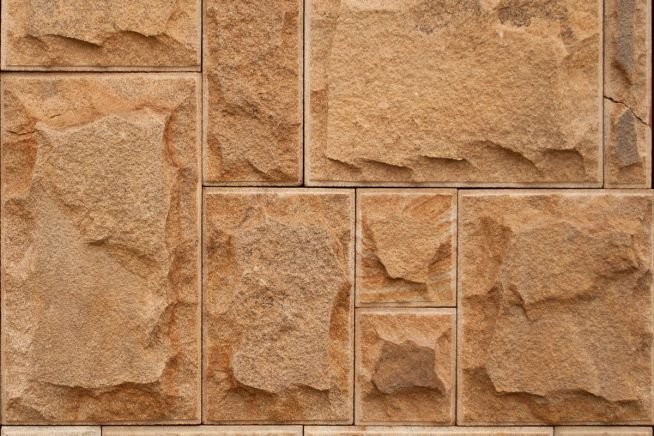
Cinder block is not a finished surface. It is a structural core that needs a finish layer. The most common finishes are stucco, stone veneer, brick veneer, or paint. Stucco is the most cost-effective. Apply a scratch coat of stucco mix directly to the block face, followed by a brown coat and a finish coat. The three-coat stucco system is roughly half an inch thick and bonds directly to the masonry. Stone or brick veneer is installed with mortar over a metal lath that is attached to the block face with masonry anchors. The veneer adds thickness to the wall, so account for the additional width when planning the wall’s location relative to property lines.
Pour a concrete cap or install precast cap blocks on top of the wall. The cap protects the top of the wall from water penetration and gives the wall a finished appearance. If using a poured concrete cap, build forms on top of the wall and pour concrete mixed with a bonding agent to adhere to the block below. The cap should overhang the wall face by at least one inch on each side to shed water away from the wall face. A drip groove cut into the underside of the overhang prevents water from running back along the underside of the cap and down the wall face.
| Wall Height | Footing Width | Footing Depth | Rebar Vertical Spacing | Cells to Fill |
| Up to 3 ft | 12 in | 8 in | Every 48 in | Rebar cells only |
| 3–4 ft | 16 in | 10 in | Every 32 in | All cells |
| 4–6 ft | 20 in | 12 in | Every 24 in | All cells + bond beam every other course |
| 6+ ft | Engineer required. Footing, rebar schedule, and wall design must be stamped. | |||
Frequently Asked Questions
Is a cinder block wall stronger than a segmental block wall?
Yes, significantly. A properly built cinder block wall with a reinforced concrete footing, vertical rebar in filled cells, and horizontal bond beam reinforcement is a structural retaining wall. It resists lateral soil pressure through its entire reinforced mass. A segmental block wall resists soil pressure through gravity and setback. A cinder block wall can retain more soil per foot of height and is less likely to lean or fail over time. The trade-off is that a cinder block wall is more expensive, requires more skill to build, and requires a finish layer because the block itself is not attractive. For walls over four feet or walls retaining heavy loads like driveways, cinder block is the better structural choice. For walls under three feet on residential lots, segmental block is faster and cheaper.
Do I really need rebar and concrete fill in a cinder block retaining wall?
Yes. A cinder block wall without rebar and concrete fill is a stack of hollow blocks held together with mortar. It has roughly the structural integrity of a brick wall, which is to say, none against the lateral pressure of soil. The first freeze-thaw cycle will crack the mortar joints. The first heavy rain will saturate the soil behind it and push the wall outward. The rebar and concrete fill are what make it a retaining wall instead of a decorative wall. Skipping the reinforcement turns a 50-year wall into a wall that fails in five years or less.
Do I need a permit for a cinder block retaining wall?
Almost certainly yes for any wall over three feet tall. Cinder block walls are permanent structures with concrete footings. Most building departments classify them the same as foundation walls and require a permit, a site plan, and in some cases stamped engineering drawings for walls over four feet or walls supporting a surcharge like a driveway or structure. Call the building department before you pour the footing. A wall built without a required permit can be ordered removed. The cost of removal plus the cost of rebuilding with a permit is far more than the permit fee.
The Bottom Line
A cinder block retaining wall is a concrete footing, a steel cage, and a masonry shell. The footing transfers the load to the soil. The rebar, both vertical and horizontal, ties the wall into a single reinforced structure. The concrete fill locks the rebar inside the block cells. The mortar bonds the blocks together. The drainage behind the wall keeps water pressure from pushing the wall outward. The finish on the front of the wall hides the grey block and makes the wall look like it belongs in the landscape. Every part of the system depends on the part below it. The footing supports the wall. The wall supports the soil. The drainage protects both. A cinder block retaining wall is the most permanent retaining wall a homeowner can build. It is also the least forgiving of mistakes because the mistakes are buried under concrete, block, and soil and cannot be fixed without tearing the wall down.